
Approved by our Plant Head
Guides for anyone about to buy a roof or a shed
These guides are written from what the plant sees, and checked and approved by our Plant Head before they go up: the tenders that leave out the coating class, the roofs laid too flat, the gutters nobody has cleaned since handover, the sheds specified for a crane that was never mentioned. The figures come from Indian standards, named by number, and from our own spec sheets and load charts. Where a figure is ours it says so.
Each guide gives the answer in its first paragraph and then explains it. Read one before you write the tender, and send it to whoever is comparing the quotes.
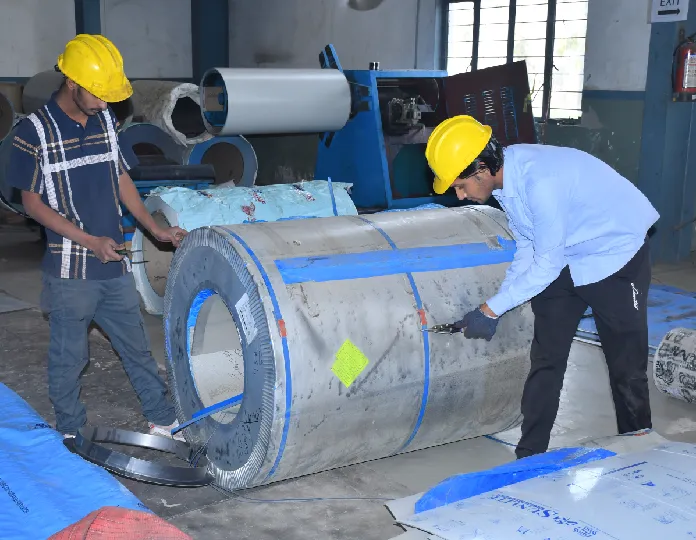
How to choose roofing sheet thickness and coating
BMT against TCT, 0.5 mm TCT as standard and other thicknesses on order, AZ150 galvalume against 275 GSM galvanised, G550 against G350, RMP, SMP and PVDF paint, and a tender clause you can copy.
PEB or conventional steel shed: how to decide
What a tapered built-up frame does that a hot-rolled section cannot, where each one wins, and ten questions to put to any PEB supplier before you sign.
Minimum roof pitch, and why metal roofs leak at the laps
The 3° minimum for our 3 Rib, how the anti-capillary flute works, where screws and sealant belong, why a 40 m slope needs more pitch than a 10 m one, and a monsoon checklist.
How often should an industrial roof be inspected?
Twice a year and after storms, an audit at eight to ten years and before solar, what a Roof Condition Index out of 100 measures, and nine rules for staff and vendors.
What to check before putting solar panels on a metal roof (coming)
The load, the penetrations and the fastener condition to confirm before a 25-year panel array covers the sheet. In preparation.
How to compare two PEB quotes for the same shed (coming)
Rate per kg against tonnage, what is in scope and what is not, and the line items that make a low quote expensive. In preparation.
How these guides are written
Our team writes them from what the plant sees, and our Plant Head checks and approves each one before it goes up. Every figure is either from a standard we name (IS 875 for wind loads, IS 800 for steel design, AS 1397 for coated sheet, IS 12866 for FRP sheet), from our own specification letters and load charts, or from a job we did. If we are not sure of a number we leave it out rather than guess, and if a guide says something has to be confirmed, it has not been yet.
Two of the four tell you when to buy something other than what we roll. If you would like a subject covered, write to us and say what you are trying to decide.